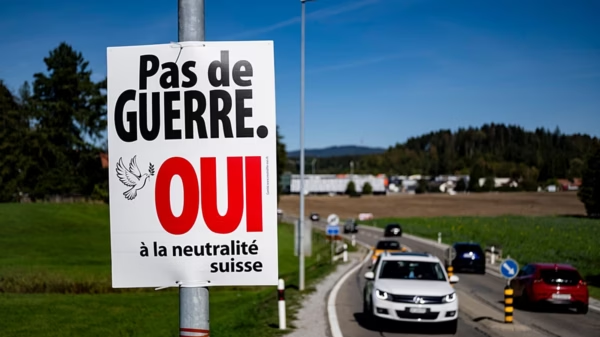










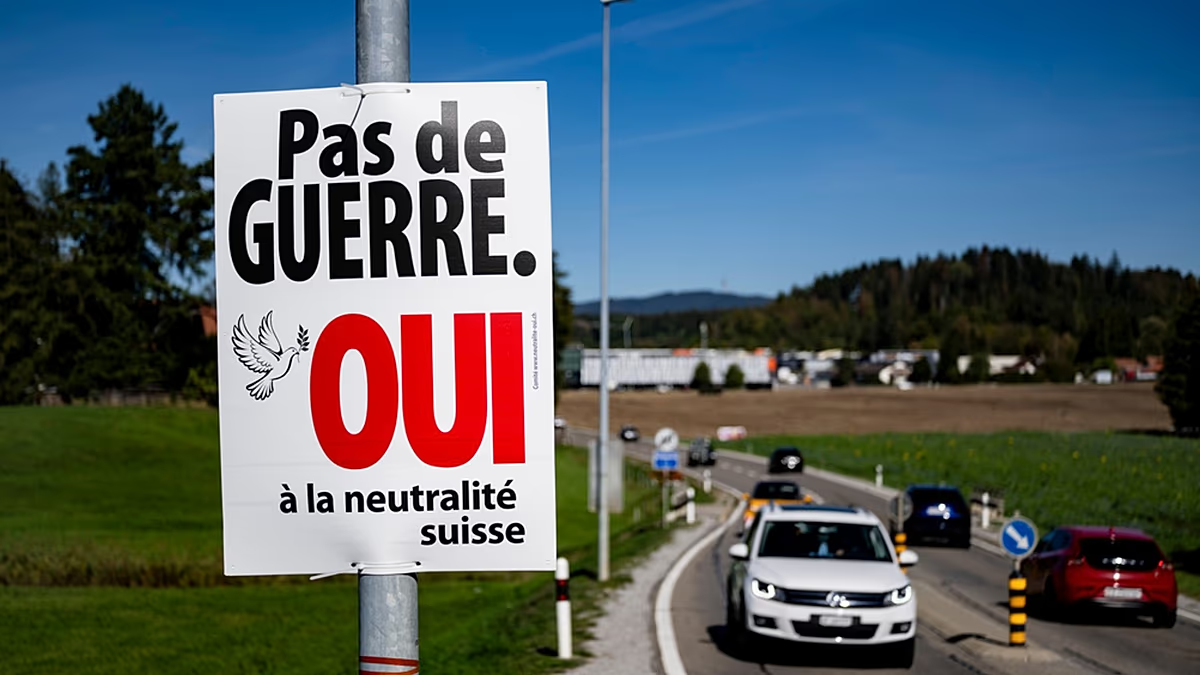
Swiss voters have delivered a resounding message on the future of their nation’s global standing, overwhelmingly rejecting a proposal to tighten the rules of national neutrality. In a Sunday referendum that saw approximately 70 percent of the electorate vote no, every single one of Switzerland’s twenty six cantons turned down the measure. The defeated initiative would have severely curtailed the government’s power to impose independent sanctions on other nations, requiring approval from the United Nations first. Critics noted that such a move would have effectively paralyzed Switzerland’s ability to respond to Russian aggression in Ukraine, given Russia’s veto power on the UN Security Council.
The push for stricter neutrality was spearheaded by the far right Swiss People’s Party and fueled by billionaire Christoph Blocher. Using the slogan No to War, Blocher poured roughly 3.8 million Swiss francs into the campaign, marking what is believed to be the largest individual contribution to a referendum in Swiss history. Supporters argued that the country had drifted too close to NATO and the European Union in recent years, claiming that current policies compromised Switzerland’s historic independence. However, many political opponents viewed this rigid definition of neutrality as a dangerous gamble, suggesting that refusing to sanction an aggressor is not true neutrality but rather tacit support for the attacker.
Following the announcement of the results, Foreign Minister Ignazio Cassis was quick to clarify that the victory for the status quo was not a rejection of neutrality itself. He emphasized that Switzerland remains committed to its non aligned tradition while maintaining what officials call cooperative neutrality. This approach allows Bern to stay out of military alliances while still upholding international law through targeted economic measures when necessary. Defense Minister Martin Pfister has similarly advocated for deeper cooperation with NATO as geopolitical tensions rise across Europe.
Despite this specific defeat for those seeking more restrictive laws, general public sentiment toward neutrality remains remarkably strong. Recent surveys indicate that about 82 percent of citizens still believe being neutral is central to the Swiss identity. For now, it seems voters prefer a flexible version of independence over one etched permanently into the constitution—a decision reflecting a desire for agility in an increasingly volatile world.